

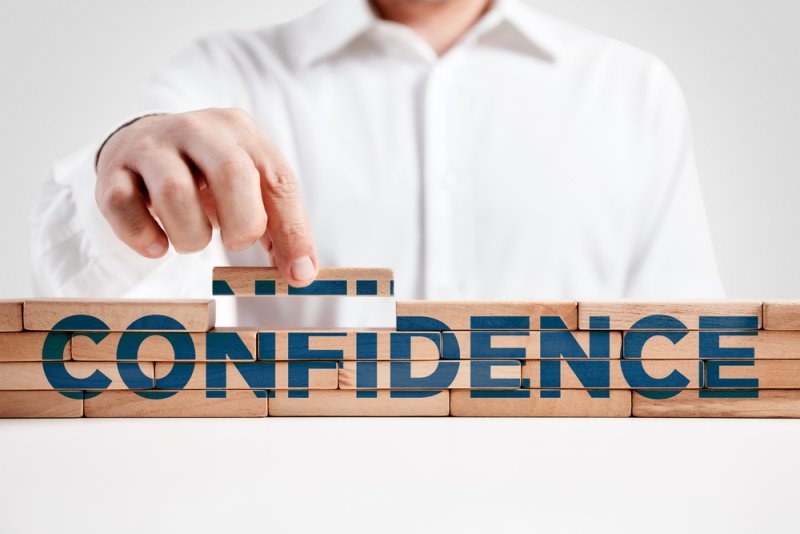
Being confident may play an important role when it comes to approaching various opportunities, communicating your ideas, making mistakes, and dealing with things you don’t know. However, confidence is not an unchanging feature; some have it, while others don’t. Confidence can be gained by practice, reflection, supportive connections, and experience that teaches one what he/she is capable of doing. The following tips for confidence building can facilitate a consistent process of improvement.
Confidence building refers to the act of increasing confidence in one’s ability, judgement, and capacity to handle challenges. Confidence goes beyond making an impression of being confident to others. Real confidence is achieved when one has knowledge of their strengths and weaknesses, and they also have evidence of their ability to handle challenges.
Self-confidence helps people take advantage of opportunities, communicate effectively, set boundaries, and cope with failures. If one trusts his/her learning capacity, hard work turns into a challenge and not a confirmation of incompetence.
Confidence at work can be enhanced by self-awareness, improved communication, supportive connections, feedback, and overcoming challenges.
The first step is making a realistic list of what skills, qualities, achievements, and experiences you are proud of. Do not concentrate on significant accomplishments; rather, make a list that includes smaller victories. You may be a good listener, reliable co-worker, creative problem solver, organized planner, or patient learner.
Through this exercise, you will get a better idea of what you can contribute to various circumstances. Also, you will avoid being defined only through weaknesses. Self-awareness and self-acceptance are useful starting points since identifying your weaknesses does not mean ignoring your strengths.
Your internal self-talk affects how you react to a certain situation. Statements like “I always do this wrong” and “I don’t possess enough skills” make you feel that one mistake reflects on your overall capabilities.
Rather than talking negatively and broadly to yourself, focus on being specific and more realistic. For instance, instead of saying “I can’t do it,” use “I haven’t learned to do it yet.” Instead of saying “I will embarrass myself,” say “I might feel nervous, but I can prepare.” Positive self-talk does not involve lying about perfection.
A large goal can be intimidating if one does not have confidence at all. It should be broken down into small steps, which will give you evidence that you can act.
Realistic goals can be very helpful in this case, as every time you accomplish something, your confidence in your own capabilities increases.
Staying away from everything that intimidates you reinforces the idea that you cannot cope with it. Instead, select some challenges that are challenging enough for you but possible to perform.
Learning how to overcome nervousness in a small, step-by-step manner can help you understand that it does not mean that you will not be able to perform well.
The body language used and speech used will influence your self-presentation as well. Try sitting or standing straight, having relaxed shoulders, making comfortable eye contact, and not crossing your arms.
Practicing these skills will gradually make your communication more confident.
It may be easy to recall your failures but hard to remember all the positive things when confidence is low. Keeping a log of progress will fix that problem.
At the end of each day or week, list three things that went well for you, one thing that was a challenge for you, and one thing you have learned. It might include routine success like completing an assignment or setting boundaries.
Revisiting this record may encourage you to see your success when it is not obvious and motivate you to take on new challenges in the future.
One good practice that builds confidence is the “evidence list.” Split a page into three columns: challenge, action, and outcome.
In the “challenge” column, note an activity that brought on some self-doubt. In the “action” column, describe what you really did. In the “outcome” column, write down the results.
Do this exercise consistently. It will refocus your mind away from self-doubt and onto concrete evidence of competence.
Select those that cause minor, healthy discomfort and provide you with the opportunity to practice.
Also Check: 8 Powerful Ways to Stop Procrastinating & Decide Fast
To increase your self-esteem, do not rely on your successes, physical appearance, other people’s praise, or your productivity. See which qualities of yours stay relevant even after you make mistakes. Be kind to yourself the way you would to a loved one.
Focusing on your development, strengths, and values may help to form a more positive basis for self-assessment.
The environment that surrounds you may affect how you view yourself. The encouraging spirit of your friends, workmates, mentors, and family may provide you with encouragement, constructive criticism, and a broader outlook when you are feeling doubtful.
If your environment always seems to be having negative effects on you, consider what changes you may make in order to protect your emotions.
While it may feel like an attack if you doubt yourself, constructive criticism will provide you with exactly those areas where you need improvement. Instead of asking if you did well, ask specific questions.
For instance, "What could I have explained better next time?" or "Which part of my presentation was the best?" Afterward, separate the information from yourself. It is not an indictment of you if there is a problem with one assignment.
Eventually, applying feedback constructively will lead to turning your uncertainty into a constructive development plan. Furthermore, improvement will be quantifiable through feedback.
It becomes difficult to build confidence if you are continuously tired and overworked. Getting proper physical activity, having enough sleep, eating healthy foods, taking a break, and participating in relaxing activities will enhance your general well-being.
Confidence-building may also be counterproductive if you expect change immediately. Do not try to compare yourself with anyone else, set unreal expectations, think that because you made a mistake you are incapable of self-improvement, or wait until you feel totally confident before you act.
Do not make the mistake of thinking that confidence means being the noisiest one. Quiet confidence could mean listening attentively, asking intelligent questions, saying that you do not understand something, and voicing your point of view without putting other people down.
Confidence is not something that will come to you suddenly but is built over time through several techniques. Begin by developing an awareness of yourself, setting realistic goals for yourself, being kind to yourself, taking on manageable challenges, and developing good habits. Take a confidence exercise to keep track of the things you are able to do and engage in confidence-building activities that challenge you while still being manageable.
Absolutely. Confidence is something that can be increased through practice, having attainable goals, developing positive relationships, and succeeding.
There is no fixed answer here since confidence gains may be seen after a few weeks of practice, and it can vary individually.
Not necessarily. Confidence is a state of self-reliance and proper self-expression. It’s possible to be a quiet person but still very confident.
Review what happened without judging your entire ability. Identify what you can learn, adjust your approach, and choose a smaller challenge that lets you practice again.
Absolutely. The strongest confidence usually comes from self-acceptance, preparation, skill development, and learning to act according to your values rather than copying another person’s personality.
This content was created by AI